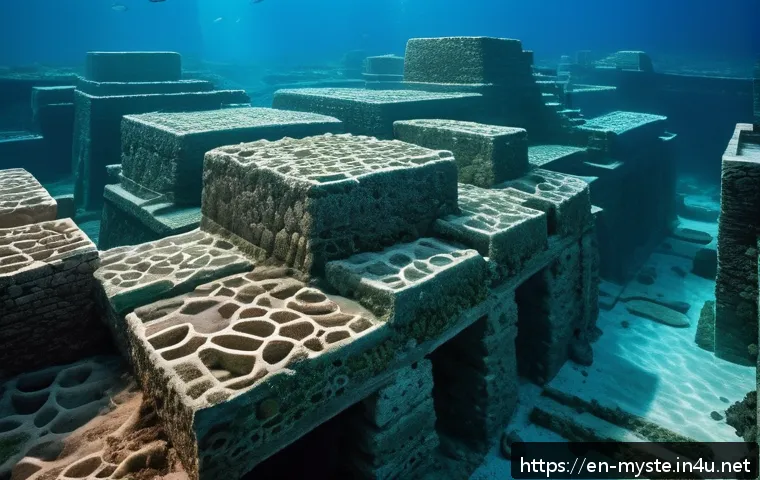
Hey there, history buffs and fellow adventurers! I don’t know about you, but there’s just something incredibly captivating about stepping back in time, isn’t there?
Lately, I’ve found myself completely immersed in the legendary tales surrounding the ancient city of Babylon, nestled in the heart of modern-day Iraq.
This wasn’t just any city; it was a powerhouse, a cradle of civilization renowned for its architectural marvels and its profound influence on the ancient world.
When I think of Babylon, my mind immediately conjures images of the magnificent Hanging Gardens, the colossal Tower of Babel, and the enigmatic reign of King Nebuchadnezzar II.
But beyond the impressive archaeological finds and textbook history, there’s a treasure trove of incredible myths and legends that have been passed down through generations.
These aren’t just old stories; they’re narratives that still echo with powerful lessons about human ambition, divine intervention, and the ebb and flow of empires, sparking our imagination even today.
I’ve always been drawn to how these age-old narratives continue to shape our perspectives on greatness and mystery. Join me as we accurately unravel these captivating legends and discover why Babylon’s legacy continues to enthrall us!
Unraveling the Mystique of Babylon’s Hanging Gardens
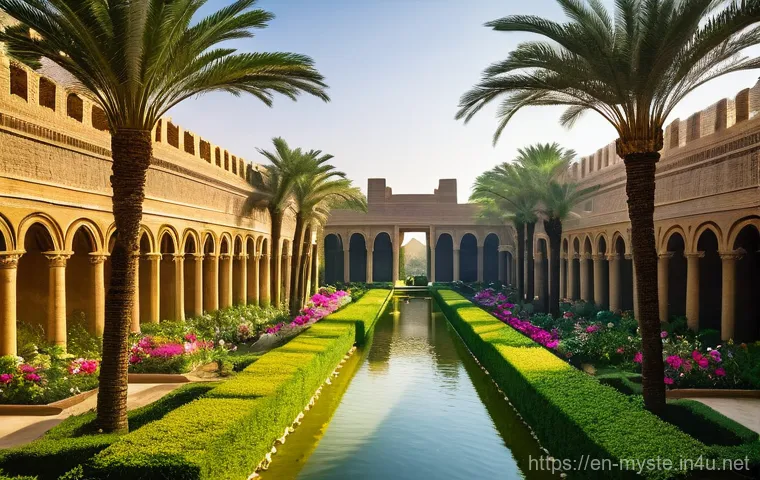
Oh, where do I even begin with the Hanging Gardens? Every time I delve into the history of Babylon, this one particular legend just grabs my imagination and absolutely refuses to let go.
We’ve all heard about them, right? One of the Seven Wonders of the Ancient World, a verdant paradise supposedly built by King Nebuchadnezzar II for his homesick queen, Amytis.
But here’s the kicker, folks – the actual physical evidence for these gardens is incredibly elusive. It’s almost like they exist more in our collective dreams and desires for ancient grandeur than in the archaeological record itself!
When I first learned about this, I was genuinely baffled. How could something so famous, so universally acknowledged, leave such faint traces? It got me thinking about how stories can become more real than reality, especially when they speak to our longing for beauty and extravagance in a world that often feels anything but.
I mean, imagine the sheer engineering feat it would have been to maintain such lush foliage in a desert climate without modern irrigation. It truly boggles the mind and makes you appreciate the ingenuity, or at least the imaginative capacity, of the ancient Babylonians.
A Gardener’s Dream or a Historian’s Enigma?
Honestly, if you’re anything like me, you’ve probably pictured these cascading terraces of flowers and trees, perhaps even fantasizing about strolling through them on a warm Mesopotamian evening.
But here’s the interesting twist: historians and archaeologists have spent decades poring over ancient texts and digging through the ruins of Babylon, and yet, definitive proof – like detailed blueprints or extensive irrigation systems unique to such a structure – remains frustratingly out of reach.
Some theories suggest they might have been misidentified with gardens in Nineveh, or perhaps they weren’t “hanging” in the way we imagine, but rather terraced gardens built on a ziggurat.
It’s a fantastic mystery, isn’t it? This lack of concrete evidence, strangely enough, only enhances their mythical allure for me. It allows our minds to fill in the gaps with even grander visions, making them a testament to the power of human storytelling and the desire for something truly extraordinary.
It makes you wonder what other marvels might have existed that time has simply swallowed whole.
My Personal Search for Ancient Wonders
I remember spending countless hours poring over old history books and documentaries, trying to visualize these gardens. My curiosity isn’t just academic; it’s a genuine yearning to connect with the past, to feel the dust of ages on my fingertips, so to speak.
If I could, I’d hop on the next flight to Iraq and spend weeks meticulously exploring every inch of the Babylonian site, hoping to unearth just one tiny clue that could confirm their existence.
It’s that thrill of discovery, that personal quest to bridge the gap between legend and reality, that truly fuels my passion for ancient history. And even if the gardens remain forever a beautiful enigma, the very idea of them – a testament to luxury, love, and human ambition – continues to inspire me.
It teaches us that sometimes, the greatest treasures aren’t what we can physically touch, but what we can vividly imagine.
The Tower of Babel: A Testament to Human Ambition
Now, let’s talk about the Tower of Babel. This is one of those stories that’s practically etched into the fabric of global culture, isn’t it? It’s more than just a biblical narrative; it’s a powerful metaphor for human ambition, pride, and the often-unforeseen consequences of reaching too high.
The story, as many of us know it, tells of a united humanity speaking one language, deciding to build a tower that would reach the heavens, a monument to their own greatness, hoping to make a name for themselves and avoid dispersion across the earth.
But, as the legend goes, God intervened, confusing their languages and scattering them, thus preventing its completion. When I think about this, it’s not just a religious tale; it’s a profound commentary on collaboration and communication.
Imagine the sheer dedication and unified purpose it would have taken to even *start* building something so colossal in ancient times. It speaks volumes about the early human spirit, their desire to leave an indelible mark on the world, and their perceived power over nature and even the divine.
When Dreams Reached for the Heavens
For me, the Tower of Babel story resonates deeply because it touches on that fundamental human drive to achieve something monumental. We all have dreams that feel like they reach for the sky, don’t we?
Whether it’s a career goal, a personal achievement, or even just building a really impressive sandcastle, there’s that primal urge to create, to ascend, to prove our capabilities.
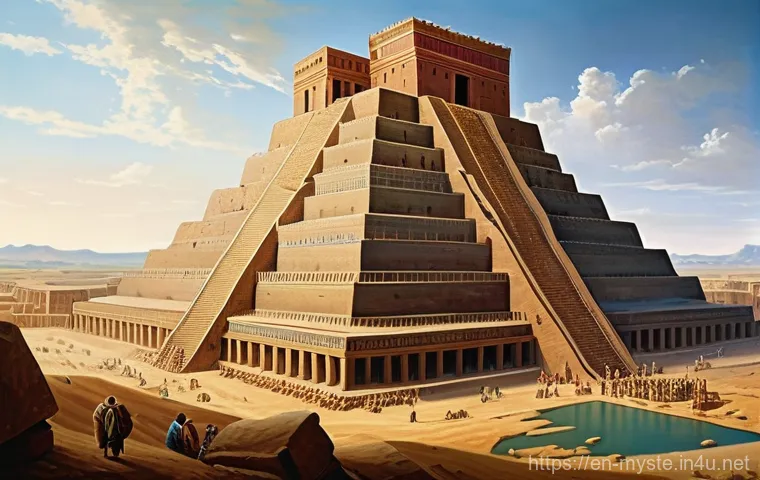
The Babylonians, with their ziggurats – stepped pyramid-like structures with temples at their summits – certainly had a penchant for vertical architecture, aiming to bridge the gap between the earthly and the divine.
The Etemenanki, a massive ziggurat dedicated to Marduk in ancient Babylon, is often cited as the real-world inspiration for the Tower of Babel. Standing there, even among the ruins, you can almost feel the echoes of that grand vision, that audacious attempt to touch the sky.
It reminds me that sometimes, our biggest projects are less about the end result and more about the journey and the collective effort.
Lessons from a Lingering Legacy
What strikes me most about the Tower of Babel isn’t just the story of its mythical downfall, but the enduring lessons it offers. It’s a cautionary tale about hubris, yes, but also a celebration of humanity’s incredible capacity for unified effort.
Think about it: a world speaking a single language, working towards a single, massive goal. While the divine intervention part might be symbolic, the breakdown of communication leading to project failure is a very real, everyday phenomenon.
I’ve certainly experienced it in smaller ways, where miscommunication can completely derail a simple task! The legend encourages us to reflect on the importance of understanding, empathy, and perhaps a touch of humility in our grandest endeavors.
It teaches us that while ambition is vital, connection and shared understanding are even more so. It also makes you wonder what marvels humanity could achieve if we truly spoke the same language, metaphorically speaking, and worked together without ego or misunderstanding.
Nebuchadnezzar II: A King Forged in Legend
When you think of Babylon, the name Nebuchadnezzar II almost immediately springs to mind, doesn’t it? He wasn’t just a king; he was *the* king of the Neo-Babylonian Empire, a figure whose reign was so impactful that he became intertwined with many of Babylon’s most enduring legends.
From what I’ve gathered through my readings and explorations, this guy was truly larger than life – a military genius who expanded his empire, a relentless builder who transformed Babylon into a breathtaking metropolis, and a figure whose decisions shaped the destiny of countless people.
My personal fascination with Nebuchadnezzar comes from trying to understand the mindset of someone with such immense power and vision. How do you go about ruling an empire, constantly strategizing, waging wars, and simultaneously overseeing monumental construction projects that would awe generations?
It’s mind-boggling to consider the sheer weight of responsibility and the force of will required. He was a complex character, undoubtedly ruthless when necessary, but also a patron of the arts and a fervent devotee of his gods.
Ruling with an Iron Fist and a Visionary Mind
Nebuchadnezzar’s reign, which spanned over 40 years, was a period of unprecedented prosperity and cultural flourishing for Babylon. He was the one, according to historical accounts, who spearheaded the construction of magnificent palaces, grand temples, the majestic Ishtar Gate, and possibly even those mythical Hanging Gardens.
He literally rebuilt and beautified Babylon to such an extent that it became the envy of the ancient world. His military campaigns were legendary, particularly his conquests of Judah and the destruction of Jerusalem, which led to the Babylonian Captivity – a pivotal event in biblical history.
I’ve always found it incredibly interesting how leaders throughout history manage to balance such disparate roles: the fierce warrior on the battlefield and the meticulous architect at home.
It speaks to a certain kind of holistic intelligence, a complete understanding of how power is both acquired and maintained, and how a lasting legacy is built through both strength and beauty.
The Personal Touch of a Powerful Monarch
Despite his grand achievements and formidable reputation, when I think about Nebuchadnezzar, I also try to imagine the person behind the crown. What were his personal motivations?
Did he truly love his queen enough to build her a garden wonder, or was it a display of imperial might? The legends paint him as a powerful, almost god-like figure, but he was still a human being, with his own ambitions, fears, and perhaps even moments of doubt.
The narratives that survive, both historical and legendary, often focus on his interactions with prophets and wise men, showcasing a king who, despite his power, was still subject to dreams, omens, and the perceived will of the gods.
This human element, even in such a colossal figure, is what makes his story so relatable and enduring. It reminds us that even the most powerful individuals are still navigating their world with their own unique blend of strengths and vulnerabilities.
The Majestic Ishtar Gate: Gateway to a Mythic Realm
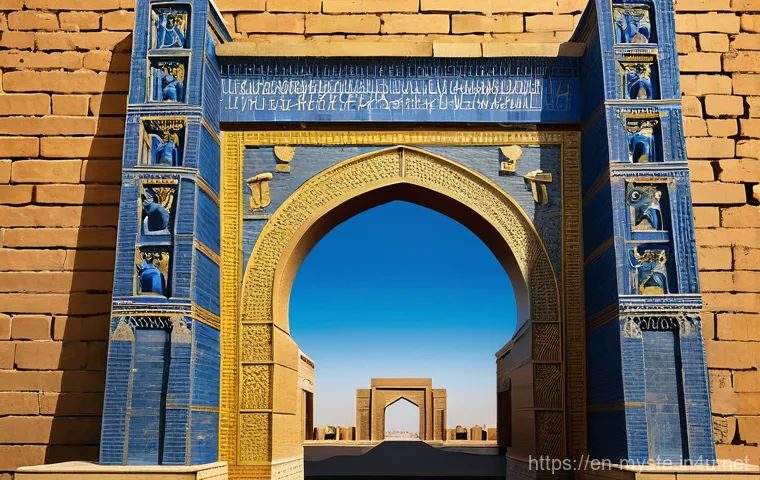
Stepping (metaphorically, of course!) through the Ishtar Gate is like walking straight into a vibrant, mythical tapestry. This wasn’t just any city gate; it was the grand entrance to the inner city of Babylon, a truly awe-inspiring testament to Babylonian artistry and engineering.
Every time I see pictures or detailed reconstructions of it, I get goosebumps! Imagine, standing before towering walls adorned with thousands of glazed bricks, shimmering with a deep blue hue – like staring into a clear night sky – and then seeing those magnificent, powerful animals: lions, fierce bulls, and mystical dragons (Mušḫuššu) striding across its surface.
It must have been an absolutely breathtaking sight for anyone approaching the city, a clear declaration of Babylon’s power, wealth, and its deep connection to the divine.
For me, it’s not just an archaeological marvel; it’s a sensory experience, even from afar, transporting you back to a time when art and architecture were intrinsically linked with spiritual and political authority.
| Feature | Description |
|---|---|
| Primary Color | Deep blue, symbolizing the heavens and divinity. |
| Featured Animals | Lions (symbolizing Ishtar, the goddess of war and fertility), Bulls (symbolizing Adad, the storm god), Mušḫuššu Dragons (mythical creatures associated with Marduk). |
| Construction Material | Glazed bricks, meticulously crafted and assembled. |
| Purpose | Main ceremonial entrance to the inner city of Babylon, designed to impress and intimidate. |
Walking Through History’s Grand Entrance
I can almost feel the ancient dust under my feet and hear the bustling sounds of a bygone era, all thanks to the incredible details preserved in the Ishtar Gate.
When you consider the effort involved in creating those glazed bricks, each one individually shaped, fired, and then arranged to form these intricate, repeating patterns of animals, it’s just mind-blowing.
It speaks volumes about the level of craftsmanship and the societal organization required for such a colossal project. It wasn’t just about functionality; it was about making a statement, about conveying the might and splendor of Babylon to every single person who passed through it.
To me, it highlights how profoundly different ancient perspectives were on public spaces and monumental art. They weren’t just decorative; they were living narratives, constantly reminding citizens and visitors alike of the city’s power and its divine protectors.
It makes me wonder what kind of psychological impact it had on people arriving there, surely inspiring awe and perhaps a little fear.
Symbolism Etched in Lapis Lazuli
What truly captivates me about the Ishtar Gate is the rich symbolism embedded in every single detail. Those lions aren’t just pretty pictures; they represent Ishtar, the goddess of war and fertility, signifying the city’s martial strength and its ability to sustain life.
The bulls symbolize Adad, the storm god, bringing to mind the agricultural bounty and the unpredictable forces of nature. And those fascinating Mušḫuššu dragons?
They’re creatures associated with Marduk, Babylon’s patron deity, embodying divine protection and authority. It’s like a grand cosmic billboard, isn’t it?
Every element chosen was deliberate, meant to convey powerful messages about the gods, the king, and the city itself. It shows a profound understanding of how visual communication can shape perception and instill a sense of reverence.
This gate wasn’t just a physical barrier; it was a spiritual and ideological threshold, a portal into the heart of Babylonian identity and belief. It makes me think about how we, even today, use symbols and imagery to convey our own values and narratives, albeit perhaps not with the same level of grandeur!
Marduk’s Might: The Divine Protector of Babylon
You can’t truly understand Babylon, its legends, or its people without delving into the pervasive influence of Marduk. He wasn’t just *a* god in their pantheon; he was *the* patron deity of Babylon, a supreme figure whose authority grew in parallel with the city’s own rise to prominence.
When I think about Marduk, I picture a powerful, benevolent, yet sometimes terrifying entity, a cosmic warrior who brought order out of chaos. The epic tales of his battles, especially with Tiamat, the primordial salt water goddess, are not just ancient myths; they are foundational narratives that explain the very creation of the world and humanity from a Babylonian perspective.
This isn’t just about religious belief; it’s about national identity, political legitimacy, and the daily spiritual landscape of every Babylonian citizen.
His cult was central to everything, from state rituals to personal prayers, and his immense temple complex, the Esagila, with its towering ziggurat, the Etemenanki, was the spiritual heart of the city.
Understanding the Heart of Babylonian Faith
For the Babylonians, Marduk wasn’t some distant, abstract deity. He was a very active, present force in their lives, responsible for their successes, their prosperity, and their protection.
His annual New Year festival (Akitu) was perhaps the most important religious event, a week-long celebration that reaffirmed his kingship over the gods and, by extension, Nebuchadnezzar’s kingship over Babylon.
During this festival, the Enûma Eliš, the Babylonian creation myth centered on Marduk’s triumph, would be recited, reminding everyone of his cosmic power.
When I read about these rituals, I try to put myself in their shoes. Imagine the collective awe, the sense of belonging, and the spiritual renewal experienced by an entire city participating in such grand, ancient ceremonies.
It wasn’t just a show; it was a fundamental reaffirmation of their worldview, their place in the cosmos, and their connection to the divine. This deep, personal connection to their gods is something that, in our often-secular world, is hard to fully grasp but absolutely vital to understanding ancient cultures.
How Gods Shaped a Civilization
Marduk’s influence wasn’t confined to grand temples and festivals; it permeated every aspect of Babylonian life. His laws, often seen as divine decrees, guided their justice system.
His perceived favor could secure victories in battle or ensure a bountiful harvest. Kings derived their authority from him, claiming to be his chosen representatives on Earth.
This isn’t unlike how many civilizations, even into modernity, have intertwined religious belief with state power. But in Babylon, it felt even more immediate, more woven into the very fabric of daily existence.
For me, exploring the role of Marduk helps shed light on the profound cultural and psychological impact that religious narratives can have. It demonstrates how a shared belief system can unite diverse populations, provide moral frameworks, and inspire both magnificent artistic achievements and unwavering loyalty.
The legends of Marduk aren’t just stories; they are the very DNA of Babylonian civilization, revealing their deepest hopes, fears, and understandings of the world around them.
The Unforeseen Fall: Babylon’s Prophetic Decline
Every empire, no matter how grand, eventually faces its sunset, and Babylon was no exception. What makes Babylon’s fall particularly fascinating, for me at least, are the layers of prophecy and historical inevitability that seem to cloak it.
After centuries of unparalleled power and glory, climaxing under Nebuchadnezzar II, the city experienced a relatively swift decline, eventually falling to the Persian Achaemenid Empire under Cyrus the Great in 539 BCE.
The stories surrounding this conquest are incredible, painting a picture of hubris, divine judgment, and strategic brilliance. It’s a gripping narrative that serves as a powerful reminder that even the most formidable fortresses and seemingly invincible powers can crumble.
When I read about it, I can’t help but feel a pang of melancholy, imagining such a vibrant, proud city succumbing to an outside force, and realizing that no matter how magnificent human achievements are, they are always subject to the passage of time and the shifting tides of power.
When Empires Crumble and Legends Are Born
The accounts of Babylon’s fall are rich with dramatic details. One famous legend, recounted in the Book of Daniel, tells of King Belshazzar’s sacrilegious feast, where he used vessels plundered from the Jerusalem Temple, only for a mysterious hand to appear and write cryptic words on the wall – “Mene, Mene, Tekel, Upharsin” – interpreted as a prophecy of Babylon’s impending doom.
That night, according to the legend, the city fell. Historically, the Persians achieved a surprise attack by diverting the Euphrates River, allowing their troops to march under the city walls through the dried riverbed.
The combination of these historical facts and vivid legends creates an incredibly compelling story of a city brought down by a blend of external military might and perhaps internal decay, exacerbated by a leadership that had grown complacent or even arrogant.
It’s a classic narrative of the rise and fall, filled with lessons about power, vulnerability, and the ever-present threat of change.
Reflecting on the Sands of Time
The legacy of Babylon’s fall extends far beyond the historical event itself. It became a powerful symbol in religious texts and later literature, a cautionary tale of earthly pride and eventual judgment.
For me, it serves as a poignant reflection on the ephemeral nature of even the most dominant empires. It’s a reminder that resources are finite, power can be fleeting, and even the most innovative defenses can be circumvented.
Looking back, it truly makes me appreciate the cycles of history and how every golden age eventually gives way. It encourages me to think about what truly endures beyond physical structures or political power.
Perhaps it’s the stories, the legends, and the lessons learned that truly grant immortality. And isn’t that what we’re doing right now, keeping Babylon alive through its captivating tales?
Wrapping Things Up
And there we have it, folks – a journey through the heart of ancient Babylon, a city that continues to capture our imaginations millennia after its golden age. From the elusive Hanging Gardens to the towering ambition of the Ziggurat, and the imposing presence of Nebuchadnezzar II, Babylon’s story is a profound tapestry woven with threads of human ingenuity, spiritual devotion, and the inevitable ebb and flow of power. It’s a testament to how even the greatest empires eventually yield to time, yet their legends, etched into the annals of history and our collective consciousness, remain vibrant and endlessly captivating. For me, these tales aren’t just about dusty ruins; they’re about the timeless human spirit, constantly striving, creating, and dreaming.
Handy Bits of Info to Keep in Mind
When you’re diving into the wonders of ancient Mesopotamia, there are always a few extra nuggets that really enrich the experience. I’ve found these particularly fascinating, and I think you will too:
1. Babylon wasn’t just *a* city; it was, for a significant period, arguably the largest and most advanced city in the ancient world. Its urban planning, defensive walls, and monumental architecture were truly groundbreaking, setting standards for future civilizations. It’s truly humbling to consider the scale of human endeavor achieved with ancient tools and knowledge. Imagine walking those ancient streets!
2. While we often focus on the grand narratives, remember that a lot of our understanding comes from cuneiform tablets – literally hundreds of thousands of them! These clay documents detail everything from royal decrees and legal codes (like Hammurabi’s Code, though he predates Nebuchadnezzar’s Babylon) to everyday transactions and personal letters. It’s like having a direct, unfiltered glimpse into their daily lives, which I find absolutely priceless.
3. The influence of Babylonian astronomy and mathematics was immense, laying foundations that were later adopted and further developed by the Greeks and Romans. They tracked celestial movements with incredible precision, developed a sexagesimal (base-60) number system still seen in our timekeeping (60 seconds, 60 minutes) and angular measurements (360 degrees). It makes you realize how much we owe to these ancient thinkers.
4. The imagery and symbolism from Babylonian mythology and religion, particularly concerning figures like Marduk and stories like the flood narrative, have had a lasting impact on subsequent cultures and religions, including elements found in Abrahamic traditions. It truly underscores how interconnected ancient narratives were and how ideas flowed across empires and eras, shaping our modern world in subtle ways.
5. Today, there are ongoing efforts to preserve and understand the archaeological site of Babylon in modern-day Iraq. While challenges abound, dedicated researchers and heritage organizations are working tirelessly to protect what remains and piece together more of this incredible history. It’s a crucial reminder that these ancient sites are not just relics, but living testaments to human civilization that need our care and attention for future generations.
Key Takeaways
Reflecting on our journey through Babylon, a few core ideas consistently rise to the surface for me. First, there’s the undeniable power of human ambition – whether it’s building a ziggurat to touch the heavens or creating a garden wonder in a desert, the drive to achieve something monumental is a constant thread through history. Second, the interplay between legend and reality is simply fascinating; some of Babylon’s most famous stories continue to thrive precisely because definitive proof remains elusive, allowing our imaginations to fill the void. Finally, Babylon’s narrative, from its majestic rise under kings like Nebuchadnezzar to its eventual fall, is a poignant reminder of the cyclical nature of empires and the enduring legacy that cultural achievements and compelling stories can leave behind. It makes me feel a profound connection to those who came before us, and it truly makes you appreciate the rich tapestry of our shared human story.
Frequently Asked Questions (FAQ) 📖
Q: Did the legendary Hanging Gardens of Babylon actually exist, or are they purely a myth?
A: Oh, this is one of my absolute favorite mysteries about Babylon! I remember digging through so many historical accounts and archaeological reports, just trying to piece together the truth about the Hanging Gardens.
What’s wild is that despite being one of the Seven Wonders of the Ancient World, there’s surprisingly little definitive archaeological evidence directly proving their existence in Babylon itself.
Imagine that! Some historians, like the brilliant Stephanie Dalley, have even proposed they might have been located in Nineveh, further north, built by the Assyrians.
But personally, I just love the romantic notion of King Nebuchadnezzar II building such an elaborate, tiered oasis for his homesick wife, Amytis, who missed the green hills of her homeland.
It paints such a vivid picture of love, ambition, and incredible engineering. It truly makes you wonder about the sheer scale of wealth and ingenuity in ancient Babylon.
Even if they remain largely in the realm of legend, the idea alone has certainly captured our imaginations for millennia, and that, to me, is powerful enough to make them feel incredibly real.
Q: What’s the real story behind the Tower of Babel, and how much of it is rooted in historical fact?
A: The Tower of Babel! This is another one that truly fascinates me because it perfectly blends religious narrative with historical ambition. When you hear “Tower of Babel,” most of us immediately think of the biblical story about humanity trying to build a tower to the heavens, only for their language to be confused by a higher power.
But what’s absolutely amazing is that there’s a very real, tangible structure that likely inspired this legend: the Etemenanki ziggurat in ancient Babylon.
I mean, can you even imagine a structure so colossal, rising up like a mountain in the middle of a bustling city? Descriptions talk about it being a massive, stepped tower dedicated to the god Marduk, reaching incredible heights.
While the biblical story adds that dramatic twist about the confusion of languages, the sheer ambition and engineering prowess behind Etemenanki were undeniably awe-inspiring.
It speaks volumes about the Babylonian people’s drive to connect with the divine and create monumental architecture that truly touched the sky. It wasn’t just a building; it was a statement about human aspiration, and that resonates deeply even today, doesn’t it?
Q: Beyond the Hanging Gardens, what other intriguing legends or stories are associated with King Nebuchadnezzar II?
A: King Nebuchadnezzar II – what a character! He’s not just the guy who supposedly built the Hanging Gardens; his reign is practically a treasure trove of incredible stories, often blending his immense power with a touch of the divine.
One of the most captivating tales comes from the Book of Daniel, where he has these vivid, prophetic dreams that only Daniel, a Jewish captive, can interpret.
There’s the famous dream of the colossal statue made of different metals, symbolizing future empires, and another about a great tree that is cut down.
These aren’t just dreams; they’re seen as divine messages, highlighting Nebuchadnezzar’s role in a larger cosmic plan. What I find really compelling is how these stories humanize such a powerful figure, showing him wrestling with divine warnings and ultimately, in some interpretations, humbling himself.
It really adds layers to his historical persona, making him not just a conqueror and builder, but also a figure deeply connected to spiritual narratives.
It makes you realize how even the most powerful leaders of the past were often seen through the lens of myths and legends, shaping how their legacies would be remembered for millennia.