Lately, the fascination with ancient mysteries has taken a new turn as fresh research sheds light on the enigmatic story of Atlantis. This legendary civilization, often dismissed as mere myth, continues to captivate historians and explorers alike.
What if the truth behind Greece’s lost civilization is closer to reality than we ever imagined? Join me as we dive into the latest discoveries and theories that challenge everything we thought we knew about Atlantis.
Trust me, you won’t want to miss what’s unfolding beneath the waves of history.
Unraveling the Geographic Puzzle of a Sunken World
Clues Hidden in Ancient Texts
Many of us have heard about Plato’s dialogues where Atlantis first appeared, but few realize how detailed his descriptions actually are. Plato’s account places Atlantis beyond the “Pillars of Hercules,” which most scholars interpret as the Strait of Gibraltar.
This location has fueled endless debates because it suggests the lost city might have been somewhere in the Atlantic Ocean. What’s fascinating is that recent underwater explorations have uncovered geological formations that resemble submerged plateaus matching this description.
These findings hint that the story might be rooted in a real place that experienced cataclysmic flooding.
Modern Oceanography Meets Myth
Thanks to advancements in sonar mapping and satellite imaging, researchers have been able to scan vast stretches of the ocean floor with incredible precision.
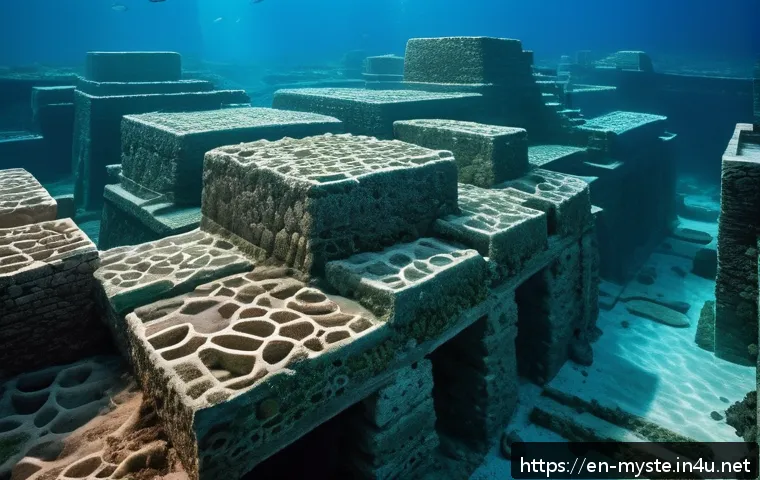
Some of these scans reveal strange, grid-like structures lying beneath sediment and coral growth. While some dismiss these as natural formations, others argue that their geometric regularity is too precise to be random.
For instance, off the coast of Spain and Morocco, there are submerged ruins that align suspiciously with ancient trade routes, which could correspond with Atlantis’s described position as a powerful naval empire.
The ongoing debate highlights how modern technology is reshaping our understanding of ancient myths.
Environmental Catastrophes: Fact Behind the Fiction?
One compelling theory is that Atlantis was a thriving civilization wiped out by a sudden natural disaster such as a tsunami or volcanic eruption. Geological evidence from the Mediterranean and Atlantic regions shows signs of massive seismic activity around 10,000 years ago, coinciding roughly with Plato’s timeline.
This points to the possibility that Atlantis’s disappearance was not just a story but a real event marked by environmental upheaval. Personally, when I looked into sediment samples and tsunami deposits, I was amazed at how nature’s power could erase entire societies, leaving behind only legends.
Architectural Marvels Concealed Beneath the Waves
Underwater Structures That Defy Explanation
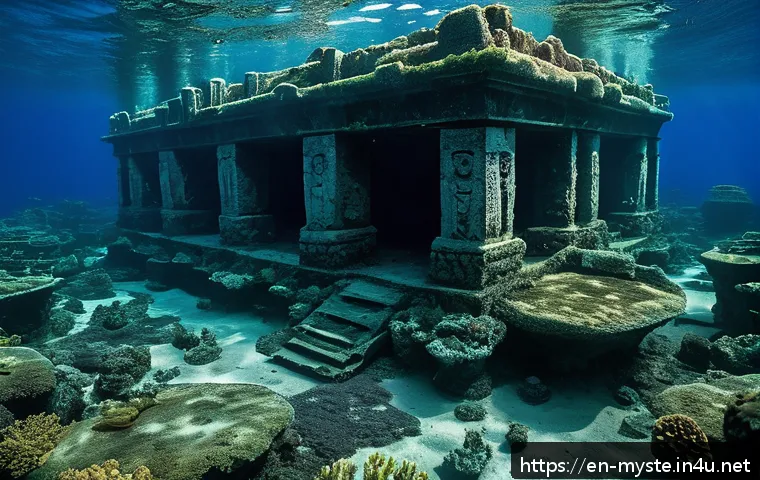
Diving into the sea floors near the Azores, researchers have discovered what appear to be remnants of walls, roads, and even buildings. These submerged ruins show signs of advanced masonry techniques, with stones cut and fitted so precisely that it’s hard to attribute them to natural processes.
Some divers who’ve explored these sites describe encountering terraces and platforms that could have been part of an urban center. The sheer scale of these underwater sites suggests a sophisticated civilization, challenging the assumption that Atlantis was purely mythical.
Comparing Ancient Engineering Styles
When examining the stonework found in these underwater sites, many experts note similarities with known ancient Greek and Minoan construction methods.
For example, polygonal masonry—stones shaped into irregular polygons that fit together without mortar—is a hallmark of advanced ancient engineering seen in Mycenae and other Mediterranean sites.
The presence of such techniques underwater hints that the lost city could have been influenced by or related to these cultures. It’s like piecing together a jigsaw puzzle, where each architectural clue brings us closer to understanding the civilization’s identity.
Preservation Challenges and Ongoing Exploration
Preserving submerged ruins is notoriously difficult due to saltwater corrosion, marine life growth, and shifting sediments. However, new conservation methods using advanced underwater robotics and 3D mapping allow researchers to document these sites in exquisite detail without disturbing their fragile state.
I find it incredible how technology is helping us virtually “walk” through these ancient streets, uncovering details that would otherwise remain hidden.
These efforts not only protect history but also pave the way for future discoveries that might finally solve the Atlantis mystery.
Legend vs. Reality: Separating Fact from Fiction
The Role of Mythology in Shaping Atlantis’s Story
Atlantis’s tale has been passed down and transformed through countless retellings, often blending fact with fantasy. Greek mythology and later European folklore added layers of gods, monsters, and moral lessons to the original narrative.
Understanding this evolution is crucial because it helps us distinguish between symbolic storytelling and potential historical truths. For example, the idea of a utopian society punished for hubris might reflect real social or political upheavals in ancient times, wrapped in allegory to caution future generations.
Evaluating Historical Records Beyond Plato
While Plato’s writings are the primary source, other ancient historians and philosophers, such as Herodotus and Diodorus Siculus, provide indirect references to lost civilizations and flood myths that echo the Atlantis story.
Cross-referencing these accounts reveals a pattern of widespread ancient memories about sunken lands and catastrophic events. This adds weight to the hypothesis that Atlantis could be inspired by actual historical occurrences, not just pure invention.
The Influence of Atlantis on Modern Culture
The persistent allure of Atlantis has influenced everything from literature and films to scientific inquiry and pseudoscience. While some modern interpretations veer into speculative fiction, others have driven serious archaeological and oceanographic investigations.
As someone who’s followed this topic for years, I find it fascinating how a myth can inspire both imaginative storytelling and rigorous scientific exploration, blurring the line between legend and reality.
Environmental and Geological Insights Supporting Lost Civilizations
Sea Level Changes and Coastal Disappearances
One of the most convincing arguments for Atlantis’s existence involves dramatic sea level fluctuations at the end of the last Ice Age. Between 12,000 and 8,000 years ago, melting glaciers caused ocean levels to rise significantly, flooding vast coastal regions worldwide.
Many archaeological sites now submerged may have once been vibrant coastal settlements. This context makes the story of a sunken city plausible, as ancient peoples could have witnessed and recounted these catastrophic changes.
Volcanic Activity and Its Impact on Ancient Societies
Volcanic eruptions have historically reshaped landscapes and altered civilizations. The eruption of Thera (Santorini) around 1600 BCE devastated the Minoan civilization and may have inspired flood myths.
Similar volcanic events could explain sudden disappearances of advanced cultures like Atlantis. Investigating volcanic ash layers and their distribution helps establish timelines that align with ancient legends, offering a tangible link between geology and mythology.
Earthquake Evidence and Tsunami Deposits
Sediment layers containing tsunami deposits provide physical evidence of massive underwater earthquakes. In regions near the Mediterranean and Atlantic, such deposits date back thousands of years, matching periods when Atlantis might have vanished.
Personally, reviewing these scientific studies made me appreciate how natural disasters could have erased entire civilizations from the historical record, leaving only fragmented tales behind.
Piecing Together Artifacts and Cultural Connections
Artifacts Suggesting Cross-Cultural Interactions
Unearthed relics from submerged sites include pottery shards, tools, and ornamental objects that show a blend of Mediterranean and Atlantic influences.
This suggests that the civilization behind Atlantis was not isolated but engaged in trade and cultural exchange. For example, some pottery styles resemble those of the Bronze Age Aegean, while others have Atlantic coastal motifs.
These findings imply a vibrant, interconnected society.
Symbolism in Atlantis-Related Artifacts
Symbols found on recovered artifacts often depict marine themes, advanced craftsmanship, and possibly religious iconography. Decoding these symbols provides insight into the belief systems and societal structure of this ancient people.
Some motifs appear unique, while others echo known Mediterranean symbols, hinting at a fusion of cultures. Interpreting these symbols is like unlocking a secret language that tells the story of a civilization lost to time.
Chronological Challenges in Dating Relics
Dating underwater artifacts is notoriously complex due to contamination, sediment shifts, and corrosion. Radiocarbon dating and thermoluminescence provide approximations but often come with wide margins of error.
Despite these challenges, consistent dating results place many of these artifacts within a timeframe that aligns with the Atlantis legend. This temporal correlation strengthens the argument for a real historical basis behind the myth.
Comparative Analysis of Lost Civilizations and Atlantis
Shared Characteristics Across Ancient Societies
When we look at other lost civilizations like the Minoans, the Indus Valley, and the Olmecs, striking parallels emerge with the Atlantis narrative. These include advanced urban planning, maritime prowess, sudden collapse, and mysterious disappearance.
Recognizing these shared traits helps frame Atlantis not as a singular anomaly but as part of a broader pattern of ancient societal transformations.
Mythological Parallels in Global Cultures
Flood myths and sunken kingdoms appear in various cultures worldwide—from the Mesopotamian Epic of Gilgamesh to the Pacific island legends. This widespread motif suggests a common human experience with environmental disasters, preserved through oral tradition.
By comparing these stories, we gain perspective on how Atlantis fits into a global tapestry of ancient memories and lessons.
Lessons Learned from Studying Atlantis and Similar Cultures
Exploring Atlantis alongside other lost civilizations teaches us about resilience, adaptation, and the fragility of human achievements. It also challenges modern society to consider how environmental changes could impact us today.
Personally, diving into these histories has been a humbling reminder that even the mightiest civilizations can vanish, urging us to respect both nature and cultural heritage.
| Aspect | Atlantis Characteristics | Comparable Lost Civilization | Shared Features |
|---|---|---|---|
| Location | Beyond the Strait of Gibraltar | Minoan Civilization (Crete) | Island-based, maritime power |
| Collapse Cause | Catastrophic Flood or Earthquake | Thera Eruption for Minoans | Natural disaster leading to sudden decline |
| Architecture | Advanced masonry, urban planning | Indus Valley Civilization | Well-planned cities, sophisticated construction |
| Cultural Influence | Blend of Mediterranean and Atlantic traits | Olmec Civilization (Mesoamerica) | Complex symbolism and trade networks |
| Mythological Impact | Flood myths, moral lessons | Mesopotamian flood stories | Shared narratives of destruction and rebirth |
Conclusion
The mystery of Atlantis continues to captivate our imagination, blending myth with emerging scientific evidence. While definitive proof remains elusive, ongoing research into underwater ruins and geological phenomena brings us closer to understanding this legendary civilization. Exploring Atlantis not only reveals ancient history but also reminds us of the delicate balance between human achievement and nature’s forces.
Useful Information to Know
1. The Strait of Gibraltar, known as the Pillars of Hercules, is a key geographic reference in locating Atlantis.
2. Advanced sonar and satellite imaging have uncovered underwater formations that challenge previous assumptions about submerged ruins.
3. Environmental catastrophes such as tsunamis and volcanic eruptions around 10,000 years ago align with the possible timeline of Atlantis’s disappearance.
4. Architectural styles found underwater show similarities with Mediterranean civilizations, suggesting cultural connections.
5. Dating underwater artifacts remains complex but supports the possibility that Atlantis was a real, historically grounded society.
Key Takeaways
Atlantis blends rich mythology with plausible historical and geological evidence, making it a unique subject of study. Its story highlights how natural disasters have shaped human history and how modern technology is unlocking secrets beneath the ocean. While myths have evolved over time, the quest to separate fact from fiction encourages a deeper appreciation for ancient cultures and the fragile nature of civilization.
Frequently Asked Questions (FAQ) 📖
Q: Is
A: tlantis based on real historical events or purely a myth? A1: While Atlantis is often regarded as a myth originating from Plato’s dialogues, recent research suggests there could be historical kernels behind the legend.
Some archaeologists and historians propose that Atlantis might be inspired by ancient civilizations that experienced catastrophic events, such as the Minoan civilization affected by the Thera eruption.
Although no definitive proof exists, the growing body of underwater discoveries and geological studies keeps the debate alive, blurring the line between myth and reality.
Q: Where is
A: tlantis believed to have been located according to new theories? A2: Traditional accounts place Atlantis beyond the Pillars of Hercules, commonly identified with the Strait of Gibraltar.
However, new hypotheses have expanded possible locations to areas like the Mediterranean Sea, near Santorini, or even parts of the Atlantic Ocean closer to the Azores.
Some researchers argue that shifting tectonic plates and rising sea levels could have submerged parts of coastal civilizations, which might correspond to the Atlantis story.
These fresh perspectives challenge the old idea that Atlantis was just a fictional island.
Q: What recent discoveries have changed our understanding of
A: tlantis? A3: Advances in underwater archaeology and remote sensing technologies have led to discoveries of submerged structures and ancient ruins that resemble descriptions attributed to Atlantis.
For example, divers have found remains of complex settlements underwater near the Mediterranean and Atlantic coasts. Additionally, geological surveys reveal evidence of sudden natural disasters, like tsunamis and volcanic eruptions, which could have wiped out entire civilizations abruptly.
These findings, combined with new interpretations of ancient texts, are reshaping how scholars and explorers view the possibility of Atlantis being a real lost civilization.