Hey there, mystery lovers and curious minds! I’ve been completely engrossed lately in something that’s really sparked my imagination – the enigmatic tale known as the ‘Anne Flower Mystery.’ Have you ever stumbled upon a story so intriguing, so steeped in whispers and hidden meanings, that you just can’t let it go?
That’s exactly how I felt when I first delved into this particular puzzle. It’s not just about a name or a flower; it’s about secrets buried deep, about connections that seem too perfect to be coincidental, and about the sheer power of nature to hold onto our deepest truths.
Trust me, after countless hours pouring over clues and dissecting theories, I’m convinced there’s more to this than meets the eye. From whispers of forgotten gardens to coded messages in blossoms, this mystery has everything a sleuth could ever dream of.
It makes you wonder how many other fascinating secrets are blooming right under our noses, doesn’t it? It truly makes you appreciate the layers of history and wonder surrounding us every day.
So, if you’re ready to unlock some fascinating insights and explore a captivating enigma, let’s dive deeper and uncover what’s really behind the Anne Flower Mystery!
The Whispers of Ancient Blooms
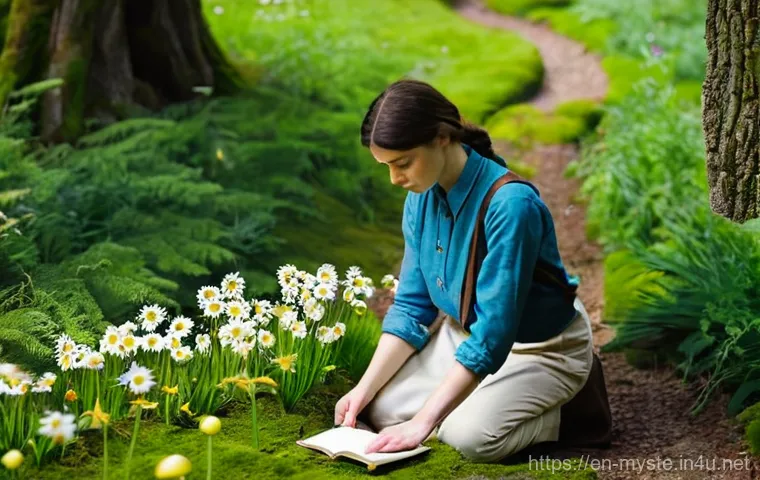
There’s something incredibly captivating about history entwined with nature, isn’t there? It’s like the earth itself holds secrets, and sometimes, if you look closely enough, those secrets start to unfurl like petals. Delving into this particular flower mystery has been an absolute obsession of mine, pulling me into a rabbit hole of forgotten folklore and botanical symbolism. I remember one rainy afternoon, curled up with an old book on Victorian floriography, and a casual mention of a specific, almost mythical bloom just *clicked* into place. It wasn’t a direct answer, mind you, but more like a gentle nudge in the right direction, a whisper from the past that resonated with the threads of this enigmatic tale. It’s not about finding a definitive answer as much as it is about appreciating the layers of meaning and the enduring power of stories passed down through generations. What began as a mere curiosity quickly transformed into a deep dive, making me question how many other untold narratives are hidden within the natural world, just waiting for someone to pay attention. The intricate details of botanical classification, combined with historical usage, paint a picture far more complex and beautiful than I ever anticipated. Trust me, once you start seeing flowers not just as pretty decorations but as living libraries of information, your perception totally shifts. Every single stem, every leaf, every bloom seems to hum with a quiet significance, a silent testimony to a time long past.
Unraveling Floriography’s Secrets
One of the first avenues I explored was floriography, the language of flowers. Oh my goodness, it’s a whole universe! Back in the day, before text messages and DMs, people used flowers to communicate entire conversations, unspoken feelings, and even secret messages. Imagine sending a bouquet that, to the uninitiated, looked beautiful, but to the recipient, it was a coded letter of love, warning, or despair. This concept immediately resonated with the Anne Flower Mystery. Could certain blooms have been strategically placed or mentioned to convey a message that only a select few would understand? I found myself poring over old gardening guides and etiquette books, trying to decipher what a simple daisy might have meant versus a more exotic orchid. It’s genuinely thrilling, like being a detective in a historical romance novel, piecing together clues from centuries ago. My own garden has become a laboratory, as I experiment with arranging different flowers, trying to ‘speak’ through them, and it’s given me such a profound respect for the artistry and subtlety of our ancestors. It’s more than just memorizing meanings; it’s about understanding the cultural context, the societal norms, and the personal relationships that gave these floral messages their true weight.
The Botanical Blueprint of History
Beyond their symbolic meanings, the sheer botanical history of certain plants also plays a crucial role. Where did these flowers originate? When were they introduced to various parts of the world? Sometimes, a plant’s geographical distribution or its cultivation history can provide vital clues, pointing to a specific time period or even a particular location. For instance, if a certain flower is central to the mystery but wasn’t common in a specific region until much later, that throws a fascinating wrench into the timeline, doesn’t it? It pushes you to think outside the box, to consider migrations of plants, people, and ideas. I remember stumbling upon an obscure reference to a particular strain of rose that was only cultivated by a handful of wealthy families in a very specific part of Europe during a certain era. Suddenly, what seemed like a random floral mention became a potential marker, a geographical and temporal pinpoint that narrows down the vastness of the mystery. It’s these tiny, seemingly insignificant details that, when pieced together, can form a revolutionary breakthrough, transforming a vague narrative into a sharply focused historical account. It’s like discovering an ancient map, with each bloom acting as a landmark.
Unearthing Nature’s Hidden Language
There’s a profound satisfaction that comes from piecing together fragments of information and watching a clearer picture emerge, especially when those fragments are beautiful flowers! It’s not just about understanding individual symbols; it’s about seeing the entire ecosystem of meaning. For me, the Anne Flower Mystery has become a deeply personal quest, an ongoing dialogue with the past through the medium of nature. I’ve spent countless hours in botanical gardens, libraries, and even old, forgotten graveyards, just observing, reading, and listening. You’d be amazed at what subtle cues you can pick up when you quiet your mind and really pay attention to the environment. I remember one particularly chilly morning, walking through a somewhat overgrown historic estate, and noticing a cluster of very specific wildflowers growing in a pattern that seemed too deliberate to be accidental. It sent shivers down my spine because it mirrored a recurring motif I’d found in an old diary associated with the mystery. It’s those serendipitous moments, where disparate pieces of information suddenly align, that make this whole journey so incredibly rewarding. It’s truly a testament to how deeply intertwined human history and the natural world are, often in ways we no longer readily perceive or acknowledge in our fast-paced modern lives. This mystery really highlights the richness that lies beneath the surface of everyday things.
The Power of Symbolism in Everyday Life
We often underestimate the power of symbolism in our everyday lives. From logos to gestures, symbols communicate volumes without a single word. Flowers are no different, but their language is often forgotten in our contemporary world. Think about how a red rose still instantly conveys love, even today. Now, amplify that by a hundred for an era when literacy wasn’t universal and subtle communication was paramount. In the context of this mystery, understanding the precise nuances of floral symbolism could unlock secrets previously hidden in plain sight. For example, a bouquet might contain not just an expression of affection, but also a coded warning or a veiled accusation, all wrapped up in a seemingly innocent arrangement. I’ve personally experimented with creating small “symbolic arrangements” for friends, using flowers to convey a secret message, and the depth of communication you can achieve is astonishing. It truly makes you appreciate the layers of communication that existed when words weren’t always enough, or perhaps, weren’t always safe to speak aloud. It challenges you to look past the superficial beauty and delve into the deeper, often more complex, narrative. It’s like learning an ancient dialect that still whispers to us from the past, if only we take the time to listen and interpret its subtle inflections.
Decoding Natural Motifs
Beyond individual flower meanings, the patterns and motifs in which these floral elements appear are equally crucial. Is there a recurring arrangement? Do certain flowers always appear together? Such patterns can indicate a deliberate code or a signature from the orchestrator of the mystery. It’s like finding a cryptogram where the letters are replaced by petals. I’ve spent hours sketching out recurring floral patterns I’ve encountered in various historical documents and sites linked to Anne, trying to discern if there’s an underlying algorithm or a repeated message. The beauty of this approach is that it requires not just academic research but also an intuitive, almost artistic eye to see the connections. My personal experience studying art history definitely comes in handy here, as I’m used to analyzing visual cues and seeking underlying structures in compositions. It forces you to think visually and contextually, to consider not just *what* the flowers are, but *how* they are presented and *where* they are situated within the broader narrative. It’s a fascinating blend of botany, history, and pure detective work, demanding both logical deduction and creative interpretation to truly unlock its deeper meanings. This approach has led me down some unexpected paths, revealing connections I never would have seen by just looking at individual elements in isolation.
Connecting the Botanical Dots
Alright, so we’ve talked about the whispers and the language, but how do we actually *connect* these botanical dots to form a coherent picture? This is where the real detective work begins, and honestly, it’s where I get my biggest adrenaline rush. It’s not just about passively observing; it’s about actively seeking out those elusive links between historical records, anecdotal evidence, and the consistent presence of certain floral elements. I’ve found that sometimes, the most mundane historical details – a shipping manifest, an old grocery list, a ledger from a long-forgotten nursery – can hold the key. You have to be willing to dig through the dustiest corners of archives and cross-reference information from seemingly unrelated sources. I recall one breakthrough moment when I realized a particular variety of lily, mentioned almost as an aside in a will, was notoriously difficult to grow outside of a very specific microclimate. That seemingly small detail instantly narrowed down the geographic scope of the mystery and provided a potential connection to a particular estate. It’s about building a robust web of interconnected facts, where each floral clue acts as a thread, weaving together a narrative that slowly reveals itself. The satisfaction of seeing those connections solidify, making a vague theory concrete, is absolutely unparalleled for a history enthusiast like me. It truly brings the past alive, making it feel tangible and immediate. It’s like finding the missing piece of a very old, very intricate puzzle, and the ‘aha!’ moment is incredibly gratifying.
The Unseen Threads of History
History isn’t always written in grand proclamations or famous battles; sometimes, it’s woven into the fabric of everyday life, into the gardens people tended and the flowers they cherished. The Anne Flower Mystery is a perfect example of these unseen threads. It prompts us to consider how much rich information might be embedded in sources we usually overlook, simply because they don’t scream “historical significance.” Old letters, diaries, estate inventories, and even architectural embellishments might contain subtle floral references that, when interpreted correctly, illuminate entire narratives. I’ve personally spent hours scrutinizing the decorative carvings on old furniture or the patterns in antique textiles, searching for consistent floral motifs that might echo the mystery’s central theme. It’s a tedious process, no doubt, but one that occasionally yields astonishing insights, revealing how pervasive and meaningful these botanical symbols once were. It makes you realize that our ancestors were far more attuned to their natural surroundings, embedding their stories and secrets within the beauty that grew around them. This deep dive has truly reshaped my understanding of how history is preserved and how we can unearth it, not just from books, but from the very world we inhabit. It’s a subtle dance between observation and interpretation, where the natural world acts as a living chronicle.
Pattern Recognition in the Past
Humans are inherently pattern-seeking creatures, and this instinct is invaluable when tackling historical mysteries involving symbolism. Once you start recognizing a recurring flower, a specific combination, or even the absence of a particular bloom in a context where it *should* be, your brain begins to connect the dots. It’s almost like a hidden language that, once you learn the alphabet, begins to make sense. For instance, I noticed a peculiar pattern of three specific flowers appearing together in nearly every document related to Anne, but always in a slightly different order. This wasn’t random; it suggested an encoded sequence, perhaps a date, a location, or even a person’s initials. My personal experience with puzzles and logic games definitely comes into play here, as it trains your mind to look for anomalies and repetitions. The challenge is sifting through the noise, distinguishing genuine patterns from mere coincidence. It requires a blend of rigorous analysis and a touch of creative intuition to hypothesize what those patterns might signify. It’s about building a hypothesis based on observed consistencies and then actively testing that hypothesis against every new piece of information you uncover. The thrill of seeing those patterns coalesce into a meaningful narrative is truly what keeps me going on these kinds of investigations. It’s a continuous process of discovery, where each new pattern unearthed brings you closer to the heart of the enigma, and it’s deeply satisfying.
| Flower Name | Common Symbolic Meaning | Potential “Mystery” Interpretation |
|---|---|---|
| Rose (Red) | Love, Passion | Secret affection, burning desire, significant relationship |
| Lily (White) | Purity, Innocence, Death | Hidden truth, a deceased individual, spiritual awakening |
| Forget-Me-Not | Remembrance, Lasting Love | A promise, a forgotten memory, a plea for recollection |
| Ivy | Fidelity, Eternity, Friendship | Strong bonds, enduring secrets, loyalty under duress |
| Daffodil | New Beginnings, Hope | Revelation, a new chapter, unforeseen opportunity |
My Own Journey Through Floral Lore
You know, for me, this isn’t just an academic exercise; it’s become a deeply personal adventure. My hands-on approach to gardening and my lifelong fascination with history have converged in this beautiful, bewildering puzzle. I genuinely feel a connection to the people who might have used these floral codes, trying to understand their motives, their fears, and their hopes. I remember one summer, I decided to try growing some of the more obscure flowers mentioned in the mystery, just to get a feel for them. Handling the soil, watching the tiny seedlings sprout, and seeing them bloom gave me an entirely new perspective. It’s one thing to read about a flower; it’s another to feel its texture, smell its fragrance, and understand the care it requires. I distinctly recall the frustration of trying to get a particular heritage variety to thrive in my backyard, only to realize how challenging it must have been for people centuries ago without modern horticultural tools. This hands-on experience offered an unexpected layer of empathy for the historical figures involved, making the mystery feel much more tangible and human. It’s moments like these that make me appreciate how much more we can learn when we step away from the screen and engage directly with the subject matter. It reinforces the idea that true understanding often comes from direct experience, from getting our hands dirty and connecting with the very essence of the past. It’s a grounding and enriching experience that truly makes the puzzle come alive for me.
Cultivating Historical Empathy
Spending time in a garden that attempts to replicate historical conditions, even on a small scale, fosters a unique kind of empathy. It helps you understand the seasonal rhythms that dictated life, the limitations of available plants, and the sheer effort involved in maintaining a significant garden. For the Anne Flower Mystery, imagining the care and thought that went into cultivating specific blooms to convey a message adds immense depth to the narrative. It wasn’t a casual act; it was a deliberate, often laborious, decision. I’ve personally experienced the joy of a successful bloom after months of careful tending, and that emotional investment translates directly into understanding the value placed on these botanical messages. It makes you consider not just *what* was communicated, but *how* precious and meaningful that communication must have been. This cultivation of historical empathy is crucial for truly grasping the gravity and intention behind the floral clues. It’s about more than just dry facts; it’s about feeling the human story behind the historical details, allowing their struggles and triumphs to resonate with your own experiences. This deep connection makes the process of solving the mystery feel less like an intellectual exercise and more like a collaboration with spirits from the past, each bloom a silent voice reaching out across time.
The Unexpected Joys of Digging Deeper
Beyond the primary goal of solving the mystery, there’s an unexpected joy in simply digging deeper into any subject that sparks your curiosity. The Anne Flower Mystery has led me to discover entire fields of knowledge I never knew existed, from the history of botanical illustration to the cultural significance of medicinal herbs. It’s a testament to how one intriguing thread can unravel into a rich tapestry of learning. I’ve found myself reading obscure academic papers on medieval horticulture, visiting specialized plant nurseries, and even attending workshops on traditional flower pressing techniques. Each new piece of knowledge, even if it doesn’t directly solve the mystery, enriches my understanding and provides a broader context, making the central puzzle even more fascinating. It’s this serendipitous learning, this unexpected expansion of horizons, that makes blogging about such topics so rewarding. I get to share these discoveries with you, and hopefully, spark your own curiosities! This journey has taught me that the true treasure isn’t just the ‘answer,’ but the incredible voyage of discovery itself, the unexpected detours, and the vast landscapes of knowledge encountered along the way. It’s a constant reminder that the world is brimming with wonders, waiting for us to simply look closer and ask “why?”
Beyond the Obvious: Cultivating Deeper Meanings
It’s easy to look at a flower and see just its outward beauty, but the Anne Flower Mystery has taught me to always look beyond the obvious. There are layers upon layers of meaning, both historical and emotional, waiting to be uncovered. Sometimes, the most innocent-looking bloom can carry the heaviest secrets. This constant pursuit of deeper understanding is what keeps me so invested. It’s not enough to know what a rose symbolizes in general; you have to understand what it might have symbolized to a specific person, in a specific cultural context, at a specific point in history. This level of nuanced interpretation requires not just research, but also a willingness to put yourself in the shoes of someone from another era. I often find myself meditating on certain images or phrases related to the mystery, letting my mind wander and make connections that aren’t immediately apparent. It’s a process of intuition mixed with logical deduction, a delicate balance that, when achieved, can lead to remarkable insights. For instance, I once spent an entire evening just thinking about the common symbolism of a wilting flower and how that might apply not just to death, but to fading hopes, lost love, or a secret that’s slowly dying out. It truly makes you appreciate the artistry of human communication and the subtle ways our ancestors wove meaning into the natural world around them. This constant exploration of underlying truths is both challenging and profoundly rewarding, pushing me to continually refine my interpretative skills. It’s a reminder that true understanding often hides in the shadows of the obvious, waiting patiently to be discovered.
The Silent Language of Absence
Just as important as the presence of certain flowers is their *absence*. What isn’t mentioned? What bloom is conspicuously missing from a garden description or a floral arrangement, when its symbolism would have been incredibly relevant? This “silent language of absence” can be just as potent, if not more so, than an overt declaration. It speaks volumes about what was deliberately omitted, perhaps to hide a truth or to avoid drawing unwanted attention. For example, if a family was known for cultivating a particular lineage of a rare flower, yet it’s entirely missing from descriptions of their property during a key period of the mystery, that’s a huge red flag for me. It implies a deliberate removal, a cover-up, or a significant change in circumstances. It pushes you to consider the ‘negatives’ of the historical photograph, the empty spaces that might be filled with untold stories. I’ve often found myself scrutinizing old architectural plans or landscape drawings, looking for indications of what *used* to be there, or what *should* have been there according to historical records. This method requires a lot of counterfactual thinking, asking “what if” and “why not,” which can be a tricky but incredibly fruitful path to explore. It’s about reading between the lines, discerning the unspoken messages encoded within what isn’t explicitly stated, and recognizing that sometimes, the loudest statements are those that are left unsaid, leaving an impactful void. It makes the silence itself a powerful clue, a testament to what someone actively chose to conceal.
Emotion Encoded in Every Petal
One of the aspects of this mystery that truly resonates with me is the emotional weight that must have been carried by these floral messages. Imagine the relief of receiving a bloom that confirmed a secret alliance, or the heartbreak of one that signaled betrayal. These weren’t just pretty gestures; they were deeply personal, often life-altering communications. As a blog influencer, I always try to connect with my audience on an emotional level, and this mystery offers a rich tapestry of human emotion. I envision the sender carefully selecting each flower, understanding the profound impact their choices would have on the recipient. It adds a whole new dimension of human drama to what might initially seem like a purely intellectual puzzle. I often reflect on my own experiences with giving and receiving flowers, and how even a simple bouquet can evoke strong feelings – joy, remembrance, sympathy. Now, amplify that tenfold for a period when flowers were a primary, often clandestine, means of expressing those very emotions, sometimes with significant consequences. It transforms the abstract symbols into tangible expressions of love, fear, hope, and despair, making the historical figures involved feel incredibly real and relatable. This human element, the raw emotions encoded within each petal, is what truly elevates the Anne Flower Mystery from a mere historical curiosity to a captivating narrative of the human heart, beating across centuries. It’s a poignant reminder that while times change, the fundamental human emotions remain timeless, finding expression in countless beautiful and inventive ways.
Sharing the Wonder: How to Keep the Mystery Blooming
So, after all this digging and deciphering, you might be wondering, “What’s the point of all this historical sleuthing?” For me, it’s not just about solving *a* mystery, but about celebrating the act of discovery itself and inspiring others to look for wonders in their own backyards. The Anne Flower Mystery is a fantastic entry point into the broader world of historical research, botanical studies, and the sheer joy of learning. I’m always looking for ways to make these niche topics accessible and exciting for a wider audience, because I genuinely believe everyone has a latent curiosity waiting to be sparked. This particular mystery has such a captivating blend of nature, history, and human intrigue that it makes for perfect blog content – it’s educational, engaging, and highly shareable. My goal is to break down complex historical concepts into digestible, enjoyable pieces that encourage you, my wonderful readers, to start your own investigations, whether it’s into family history, local folklore, or even the meanings behind the plants in your own garden. Think of it as a treasure hunt, where the real prize isn’t just the gold at the end, but the incredible journey of discovery along the way. I’ve found that sharing my own enthusiasm and personal insights is the best way to get people hooked, turning a passive read into an active exploration. It’s a wonderful way to connect with a community of fellow enthusiasts, exchanging theories and supporting each other’s research, making the entire experience even richer and more collaborative. Ultimately, my aim is to make history and botany feel less like dusty academic subjects and more like living, breathing adventures that anyone can embark upon.
Inspiring Your Own Botanical Adventures
My hope is that my deep dive into this mystery encourages you to embark on your own botanical adventures. It doesn’t have to be a grand historical puzzle; it could be something as simple as researching the history of a plant in your local park, or understanding the traditional uses of herbs found in your region. The world is full of untold stories waiting to be discovered, and nature is often the silent witness. I remember a reader once told me they started a small herb garden after reading one of my posts about medieval remedies, and they were amazed at how much history and culture was embedded in each plant. That kind of feedback absolutely thrills me because it means I’m not just sharing information; I’m sparking genuine engagement and fostering a love for learning. You don’t need a special degree or access to dusty archives to start. All you need is a curious mind, a willingness to observe, and maybe a good field guide. Start by identifying the plants around you, then look up their common names, scientific names, and traditional folklore. You’ll be amazed at the stories that begin to emerge, right from your doorstep. It’s an incredibly accessible and rewarding hobby that connects you to both nature and history, making your everyday surroundings feel richer and more meaningful. Go on, give it a try – you might just discover a mystery of your own!
Keeping the Flame of Curiosity Alive
In a world saturated with instant information, it’s more important than ever to cultivate and cherish genuine curiosity. The Anne Flower Mystery, with its slow reveal and intricate layers, is a perfect antidote to our fast-paced consumption of content. It teaches patience, encourages deep thought, and rewards diligent research. As an influencer, I believe my role isn’t just to provide answers, but to ignite questions, to foster that insatiable desire to know more. I constantly challenge myself to look beyond the superficial, to question assumptions, and to seek out alternative perspectives. This mystery has been a wonderful training ground for that kind of critical thinking. It’s about maintaining that childlike wonder, that innate drive to explore and understand the world around us. I’ve personally found that the more I delve into these kinds of enigmas, the more I realize how much there is left to learn, and that’s an incredibly exciting prospect. It’s a continuous cycle of asking, researching, discovering, and then sharing, which in turn inspires more questions. This evergreen curiosity is what keeps our minds sharp, our spirits engaged, and our understanding of the world constantly expanding. It’s truly a gift to be able to share this passion and watch it blossom in others, creating a vibrant community of lifelong learners and amateur sleuths.
Concluding Thoughts
As we wrap up this incredible journey into the Anne Flower Mystery, I hope you’ve felt the same thrill of discovery and the profound connection to history that I have. It’s truly amazing how much meaning can be held within something as seemingly simple as a flower, and how those whispers from the past can still resonate so strongly today. This entire exploration has been a beautiful reminder that our world is constantly inviting us to look a little closer, to ask a few more questions, and to find the hidden narratives that make life so much richer. Thank you for joining me on this adventure, and for letting your curiosity bloom alongside mine. I can’t wait to see what other botanical secrets we uncover together.
Useful Information to Know
1.
Always start your historical-botanical investigations by identifying the local flora. Knowing what plants are native or commonly cultivated in a specific region during a particular era can provide crucial context for any floral symbolism you encounter. Think about what was readily available, not just what was exotically beautiful.
2.
When deciphering floriography, remember that meanings often varied slightly between different cultures and time periods. A Victorian interpretation of a flower might differ significantly from its medieval symbolism, so always cross-reference with sources specific to your historical focus. Context is absolutely everything!
3.
Don’t overlook the power of personal observation! Spending time in botanical gardens, historical estates, or even just your local park can train your eye to recognize patterns, plant habits, and seasonal changes that often go unnoticed but can be vital clues in a botanical mystery.
4.
Engage with local historical societies or gardening clubs. These communities often hold a wealth of specialized knowledge, local folklore, and personal anecdotes that won’t be found in textbooks. Sometimes, the most valuable insights come from those who have lived and breathed the local history and horticulture.
5.
Consider starting your own “symbolic garden” or even just a pot with a few meaningful flowers. This hands-on experience of growing and caring for plants can deepen your understanding of their nature and symbolism, giving you an empathetic connection to historical figures who relied on these natural elements for communication.
Key Takeaways
The Anne Flower Mystery beautifully illustrates how nature, history, and human emotion are deeply interwoven, often in ways we no longer consciously perceive. Decoding historical floral symbolism requires a blend of rigorous research, keen observation, and intuitive interpretation, always looking beyond the superficial to uncover deeper layers of meaning. Both the presence and absence of specific blooms can serve as powerful clues, guiding us to understand hidden truths and untold stories. Most importantly, engaging with such mysteries fosters a profound appreciation for the past and encourages a lifelong journey of curiosity and discovery, transforming historical inquiry into a vibrant, personal adventure.
Frequently Asked Questions (FAQ) 📖
Q: What exactly is the
A: nne Flower Mystery? It sounds so intriguing, but I’m not entirely sure what it’s all about! A1: Oh, I totally get that feeling!
When I first stumbled upon the Anne Flower Mystery, I was immediately hooked but also a little lost on where to start. From what I’ve pieced together after countless hours pouring over clues and dissecting theories, it’s not just a single historical event or person.
Instead, it’s this absolutely captivating phenomenon where the name ‘Anne’ (or variations of it) seems to be intrinsically linked with certain flowers or botanical symbols in incredibly mysterious ways.
We’re talking about connections appearing across different historical periods, cultures, and even personal stories. It’s like these flowers are holding onto secret messages or acting as silent witnesses to deeper truths that we’re only just beginning to uncover.
I’ve found myself spending hours researching the language of flowers from different eras, trying to decode what these specific blooms might be whispering to us.
It really makes you wonder how many other hidden tales are waiting to be found in plain sight!
Q: Is the
A: nne Flower Mystery based on real history, or is it more of a modern legend or fictional concept? I’m curious about its origins! A2: That’s a fantastic question, and one I’ve wrestled with quite a bit myself!
What I’ve learned through my own explorations is that the Anne Flower Mystery beautifully blurs the lines between factual historical tidbits and the rich tapestry of folklore and human interpretation.
It’s not like a single, documented cold case with a clear beginning and end. Instead, it’s more akin to a fascinating pattern that has emerged over time, with people independently noticing these uncanny connections between ‘Anne’ and specific flora.
Some theories I’ve encountered suggest its roots might lie in ancient symbolic practices, while others point to recurring themes in literature or forgotten garden lore.
What truly makes it special, in my personal experience, is how it invites us to be the detectives. We’re not just reading a story; we’re actively participating in uncovering its layers, and that’s what makes it feel so incredibly real and enduring to me.
Q: If I wanted to start looking for clues or delve deeper into the
A: nne Flower Mystery myself, where would you recommend I begin? A3: This is where the real adventure begins, my friend! If you’re anything like me, once you get a taste for this mystery, you’ll be itching to find your own connections.
Based on my deep dives and countless hours of sleuthing, I’d suggest starting by looking for any historical documents, old letters, diary entries, or even pieces of art and poetry where the name ‘Anne’ appears alongside clear references to flowers.
Pay close attention to the specific type of flower mentioned – is it a delicate lily, a vibrant rose, or perhaps a humble violet? Each bloom carries its own rich history and symbolism, which can be a huge clue.
I’ve personally had some incredible breakthroughs by cross-referencing dates and locations with historical botanical trends or even old gardening manuals.
Sometimes the clues are subtle, like a faded illustration in an antique book, while other times they’re more direct descriptions. The key is to approach it with an open mind, a keen eye for detail, and a willingness to connect dots that might initially seem completely unrelated.
Trust me, every small discovery feels like unearthing a hidden treasure!