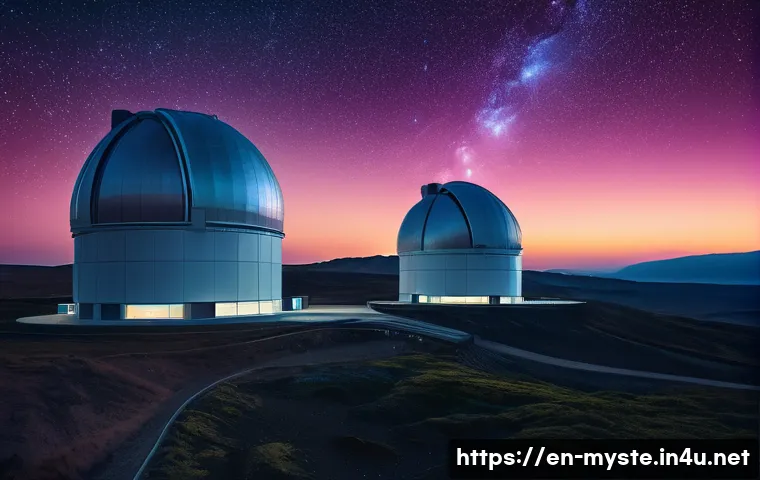
Have you ever gazed up at the night sky and wondered what incredible secrets our universe holds, or what groundbreaking discoveries are quietly unfolding in the hallowed halls of academia right now?

It’s truly mind-boggling when you think about it. For years, I’ve been fascinated by the sheer depth of research happening at places like Harvard, where brilliant minds are pushing the boundaries of what we thought was possible, often venturing into realms that sound like pure science fiction.
Imagine a project so shrouded in intrigue, so potentially world-altering, that it makes you question everything you thought you knew about our place in the cosmos.
What if I told you that some of the most profound “mysteries” of our time are being actively investigated, touching on everything from the origins of life to encounters with the truly unexplained?
It’s not just theory anymore; these are real, unfolding investigations with implications that could reshape our entire future. This isn’t just academic chatter; it’s the kind of exploration that redefines reality as we know it, sparking debates and pushing the limits of human understanding.
Let’s peel back the layers and uncover the astonishing truths behind Harvard’s most enigmatic pursuits.
Peering Beyond Our Cosmic Neighborhood
The Hunt for Unidentified Aerial Phenomena
You know, for years, the idea of “UFOs” was something relegated to late-night talk shows and obscure internet forums. I admit, I was a bit of a skeptic myself, always looking for the most rational explanation. But then you hear about serious scientific endeavors, like Harvard’s Galileo Project, led by Professor Avi Loeb, and it really makes you pause and reconsider everything. They’re not just looking for little green men; they’re deploying sophisticated ground-based observatories, packed with optical and infrared telescopes, to rigorously collect and analyze data on Unidentified Aerial Phenomena (UAPs) and other anomalous interstellar objects. This isn’t about speculation anymore; it’s about applying hard science and advanced AI algorithms to finally understand what’s truly out there. I remember seeing some of the initial reports about objects moving at speeds and trajectories that defy conventional physics, and my jaw just dropped. It’s like something out of a blockbuster movie, but it’s happening right now, with brilliant minds dedicating their lives to uncovering these cosmic secrets. It’s a huge shift from dismissing these sightings to actively seeking scientific explanations, and frankly, it’s thrilling to watch unfold. What if we’re not alone, and these researchers are the ones who finally prove it?
Unraveling Interstellar Mysteries
Beyond the atmospheric enigmas, the Galileo Project is also deeply invested in understanding interstellar objects that visit our solar system, like the infamous ‘Oumuamua or the 2014 interstellar meteor. ‘Oumuamua, with its highly unusual properties and non-gravitational acceleration, really challenged what astronomers thought they knew about natural celestial bodies. Professor Loeb even stirred up quite a debate by suggesting it could be an artificial probe. I mean, imagine that! An object from another star system, potentially built by an alien civilization, just whizzing through our cosmic backyard. It’s a truly mind-bending thought, and the kind of thing that makes you feel incredibly small but also profoundly connected to a larger universe. The project has even recovered tiny magnetic spherules from the Pacific Ocean, believed to be fragments of that 2014 interstellar meteor, and their composition is unlike anything found in our solar system. It’s a testament to human curiosity and ingenuity, pushing us to ask the biggest questions and chase down the most elusive answers, even if they challenge our comfort zones.
Reimagining Life’s Very Beginning
Crafting Life from Scratch
Have you ever paused to truly consider how life, as we know it, actually began? It’s a question that has baffled thinkers for centuries, and it’s one that Harvard’s Origins of Life Initiative is tackling head-on. What really blows my mind is their audacious attempt to create artificial cell-like chemical systems that can simulate the fundamental processes of life itself – things like metabolism, reproduction, and even evolution. Just think about that for a second! Scientists are literally building the very foundations of life from non-biochemical molecules in a lab. It gives me goosebumps to think about the implications. It’s not just about understanding our past; it’s about understanding the very blueprint of existence and what conditions are truly necessary for life to emerge, perhaps even on other distant planets. This isn’t a theoretical exercise; it’s hands-on, experimental science that feels like it’s pulled straight from a futuristic novel, yet it’s unfolding right now in the hallowed halls of academia.
The Spark of Early Earth
One of the most compelling pieces of this grand puzzle involves understanding the conditions on early Earth. I always pictured a fiery, chaotic landscape, but the specifics of how simple elements transformed into complex organic molecules – the very building blocks of life – remain incredibly elusive. Recent research from Harvard scientists has homed in on a fascinating possibility: lightning strikes. Can you imagine billions of years ago, a barren Earth, constantly bombarded by lightning, and each strike acting as a tiny, powerful chemical reactor, transforming the inert atmosphere into a hotbed of reactive carbon and nitrogen compounds? It’s such a visceral image, and it completely reshapes how I think about our planet’s violent beginnings. This work really highlights that life’s emergence might not have been a single, miraculous event, but rather a series of chemical pathways ignited by powerful natural phenomena. It’s a powerful reminder that sometimes the most profound answers are found in the most elemental forces of nature. The ongoing debates about RNA World hypotheses and whether life began on Earth or was seeded from elsewhere just add to the incredible drama of it all.
Diving into the Quantum Fabric of Reality
Unveiling Exotic Matter States
If you thought the mysteries of space were mind-bending, wait until you dip your toes into the quantum realm. I’ve always found quantum physics to be a bit like magic – completely counterintuitive, yet fundamentally real. Harvard’s physicists are genuinely pushing the boundaries of what’s possible, recently demonstrating the synthesis and control of exotic particles called non-Abelian anyons. These aren’t your typical bosons or fermions; they’re something entirely new, existing in a theoretical 2D world, but now, incredibly, brought to life in a lab. It’s like discovering a whole new set of colors you never knew existed! This breakthrough is more than just a cool parlor trick; it’s a monumental step towards developing stable quantum computing, which could revolutionize everything from drug discovery to encryption. The sheer ingenuity required to engineer a quantum wave function with such precise properties just blows me away. It feels like we’re just scratching the surface of what the universe truly is, and these researchers are giving us glimpses into its deepest, most fundamental layers.
The Promise of Quantum Computing
The implications of this quantum exploration are staggering, especially when you consider the future of computation. Imagine computers so powerful they could solve problems that would take today’s supercomputers billions of years. That’s the promise of quantum computing, and Harvard is at the forefront of making it a reality. They’re not just building faster machines; they’re fundamentally reimagining how information is processed, leveraging the bizarre rules of quantum mechanics like entanglement and superposition. When I think about what this means for medicine, materials science, or even artificial intelligence, it feels like we’re on the cusp of an entirely new technological era. It’s a challenging field, full of philosophical paradoxes and complex mathematics, but the potential rewards are immense. The Harvard Quantum Initiative is a vibrant hub of researchers intensely focused on transforming quantum theory into useful systems and devices, and they even have a dedicated PhD program to cultivate the next generation of quantum pioneers. It’s a testament to how human intellect can grapple with the most abstract concepts and turn them into tangible, world-changing innovations.
Exploring the Depths of Human Consciousness
Pinpointing the Seat of Awareness
This is where things get truly personal, in my opinion. What *is* consciousness? Where does that feeling of “I” come from? It’s a question that has fascinated philosophers and scientists forever, and honestly, it keeps me up at night sometimes. Harvard Medical School researchers have made some truly groundbreaking strides, potentially unearthing the very neural network from which consciousness derives. They’ve looked at patients in comas, meticulously mapping brainstem injuries and their impact on arousal and awareness – the two critical components of consciousness. It’s profoundly moving to think that a tiny, specific area in the brainstem, when damaged, can render someone unconscious. This research isn’t just about understanding a medical state; it’s about getting closer to comprehending the very essence of what makes us human, what allows us to experience the world, to feel emotions, to dream. It’s a scientific journey into our innermost being, and every discovery feels like a tiny window into the soul itself.
AI’s Impact on the Human Mind
As we delve deeper into our own consciousness, we also have to grapple with the rise of artificial intelligence, which is rapidly reshaping our world. And let’s be honest, it’s a double-edged sword, isn’t it? Harvard and MIT are actively studying how AI affects our cognitive skills and mental state, and some of the early evidence is truly thought-provoking. While AI can undeniably boost productivity, there’s a growing concern that frequent reliance on generative AI might undermine our intrinsic motivation, weaken memory retention, and even erode critical thinking. I’ve personally felt that pull – the temptation to just “ask AI” instead of wrestling with a complex problem myself. It’s so convenient, but what’s the long-term cost? It’s like we’re training our brains to offload the hard work, and that could quietly dismantle the very systems that power our creativity and originality. This isn’t just academic chatter; it’s a very real, very urgent conversation about how we integrate these powerful tools without losing the unique spark of human intellect and consciousness. We need to be intentional about how we use AI, treating it as a co-pilot rather than letting it take the wheel entirely.
Innovating for Tomorrow’s World and Beyond
Harnessing Advanced Technologies
Harvard’s innovative spirit extends far beyond theoretical physics and origins of life, reaching into tangible technologies that are literally shaping our future. I’m always amazed at the sheer breadth of their research, from engineering incredible materials to revolutionizing how we interact with the digital world. The Harvard John A. Paulson School of Engineering and Applied Sciences, for example, has a storied history of pioneering breakthroughs, from the early programmable computers to modern marvels like metalenses – nanostructure-based lenses that could revolutionize optics. They’re even creating tiny flying robots inspired by nature, like RoboBees, designed for everything from agriculture to disaster relief. It’s incredible to think that the same institution exploring the deepest cosmic mysteries is also developing solutions for immediate global challenges, leveraging incredible creativity and multidisciplinary collaboration. These aren’t just gadgets; they’re carefully engineered solutions that promise to improve our quality of life and push the boundaries of what’s possible in our daily existence. It makes me feel optimistic about the future, knowing such brilliant minds are focused on making the world a better, more technologically advanced place.
Pushing the Boundaries of Space Travel
And speaking of the future, our gaze inevitably turns skyward. Harvard has a long, illustrious history in space research, constantly expanding our understanding of the cosmos. Beyond the search for alien life, researchers are deeply invested in areas like understanding black holes – those mysterious regions of spacetime that still defy complete comprehension. In 2019, seeing the first-ever image of a black hole was an absolutely surreal moment for me, a true testament to human collaboration and scientific endeavor. But it’s not just about distant galaxies; it’s also about practical applications for space exploration closer to home. Harvard technology is even being used in collaboration with NASA to advance Earth science from orbit, with new “metasurface” technology potentially enabling smaller, more efficient satellites for climate and atmospheric monitoring. Imagine being able to better predict weather patterns or understand climate change with unprecedented accuracy, all thanks to innovations coming out of Harvard. It’s a thrilling blend of fundamental science and applied engineering, ensuring that humanity’s reach continues to extend further into the final frontier.
Unlocking the Mysteries of Health and Longevity
Revolutionizing Disease Understanding and Treatment
It’s not just the cosmos or the quantum world that Harvard researchers are cracking open; they’re also deep in the trenches fighting some of humanity’s most persistent health challenges. Honestly, when I hear about some of these breakthroughs, it gives me a real sense of hope. Take for instance, the incredible discovery in 2022 by Harvard Chan School scientists, who found a strong link between multiple sclerosis and the Epstein-Barr virus. For a disease affecting millions with no known cure, this kind of revelation is a game-changer, pointing toward new avenues for prevention and treatment. And then there’s the work on hearing loss, where a team created a drug-like cocktail that successfully regenerated hair cells, offering a glimmer of hope for the millions worldwide affected by this condition. It’s not just about making incremental progress; it’s about audacious leaps that can truly transform lives. I’ve always believed that the most profound scientific endeavors are those that directly alleviate human suffering, and seeing Harvard at the forefront of this kind of research is truly inspiring. They’re not just finding answers; they’re giving people back their lives, their senses, their futures.
Pioneering Personalized Medicine and Aging Research
Beyond specific diseases, there’s a huge push towards understanding the broader mechanisms of aging and developing personalized approaches to health. Think about Alzheimer’s – a truly devastating condition affecting so many families. Harvard-affiliated Mass General Brigham researchers are developing at-home olfactory tests that could identify those at risk years before symptoms even appear. Imagine the power of early detection, allowing for interventions that could genuinely make a difference. It’s about taking a proactive, rather than reactive, approach to health. The broader research on how diet and lifestyle affect Alzheimer’s, or even the fundamental questions about genetics and how they make us who we are, are all part of this massive undertaking. It feels like we’re moving towards an era where medicine is tailored specifically to each individual, using our unique biological blueprints to prevent disease and extend healthy lifespans. This deep dive into personalized health and aging isn’t just about adding years to life, but adding *life* to years, ensuring quality and vitality as we grow older. It’s a compassionate and crucial area of research that impacts every single one of us.
Shaping the Future Through Data and Design
The Data Science Revolution
In our increasingly interconnected world, data is king, right? It’s the new frontier for understanding everything from human behavior to climate patterns. Harvard’s Data Science Initiative is a huge part of this revolution, uniting researchers from diverse fields to tackle complex questions with data-driven discovery. I often think about how much hidden insight lies within massive datasets, just waiting to be uncovered by the right algorithms and brilliant minds. This initiative is fostering an integrated data science community across the entire university, which is critical because real-world problems don’t fit neatly into single academic departments. Whether it’s modeling infectious disease epidemics with AI or using advanced analytics to understand social structures, the power of data science is truly transformative. It’s about more than just crunching numbers; it’s about extracting meaningful patterns and predictions that can inform policy, improve public health, and drive innovation across countless sectors. It’s a field that’s moving at warp speed, and it’s exciting to see Harvard leading the charge in making sure that data serves the greater good.
Designing Sustainable and Intelligent Environments
Beyond the abstract world of data, Harvard is also actively shaping our physical environment through groundbreaking design and engineering research. The Harvard Graduate School of Design, for instance, has incredible initiatives that bridge architecture, urban planning, and landscape architecture with fields like environmental studies and engineering. I’m a firm believer that how we design our cities and spaces directly impacts our well-being and the planet’s health, so this kind of interdisciplinary work is so vital. They’re exploring urgent global issues, from creating healthier places in the future to leveraging new technologies for social good. Think about the Laboratory for Design Technology, which is focused on how design technologies can improve the human condition in a world rapidly changing due to tech. It’s about designing smart, sustainable, and resilient environments that can adapt to future challenges. This isn’t just about aesthetics; it’s about functionality, sustainability, and creating spaces that truly nurture human life and protect our planet. It’s inspiring to see them integrate cutting-edge research with practical, real-world applications to build a better tomorrow for everyone.
Understanding the Universe Through Astrophysical Lenses
Mapping the Cosmos with New Tools
When you look up at the night sky, it’s easy to feel a sense of overwhelming scale and mystery. Harvard’s astronomers are, quite literally, helping us map that mystery with an ever-evolving arsenal of tools and computational power. They’re asking the biggest questions about the universe – how it began, how galaxies form, and what secrets lie hidden in the darkest corners of space. I’ve always been captivated by images from powerful telescopes, and it’s truly astounding to think about the technology behind them, pushing the limits of what we can observe. Harvard researchers were instrumental in developing programmable quantum simulators, which can now operate with an incredible 256 qubits, allowing for simulations of complex astrophysical phenomena that were once unimaginable. This isn’t just about taking pretty pictures; it’s about gathering incredible amounts of data to piece together the cosmic story, from gravitational waves to the elusive dark matter and dark energy that make up most of the universe. It’s like having a universal decoder ring, slowly revealing the grand design of everything around us, and it’s a journey I find endlessly fascinating.
The Deep Dive into Black Holes and Stellar Evolution
And then there are black holes. Just the name itself evokes a sense of awe and a touch of terror. Harvard has been at the forefront of black hole research, contributing significantly to our understanding of these enigmatic cosmic behemoths. I remember the sheer excitement when the first-ever image of a black hole was unveiled in 2019, and then just a few years later, an image of its magnetic field. It felt like we were finally seeing the unseeable, glimpsing something truly alien and powerful. But the research doesn’t stop there. Harvard astronomers have even observed a star being consumed by a black hole and its remnants being emitted years later, giving us a terrifying preview of what could happen to our own Sun and Earth one day. This kind of research is vital for understanding not just the life and death of stars, but also the very structure and evolution of galaxies. It’s a profound exploration into the extreme physics of the universe, pushing our theories to their breaking point and, in doing so, revealing an even more magnificent and terrifying cosmos than we ever imagined.
Ethical Frontiers in AI and Future Technologies
Navigating the Moral Maze of Artificial Intelligence
As technology rapidly advances, especially in the realm of Artificial Intelligence, it brings with it profound ethical questions that demand serious consideration. Harvard isn’t just building the future; they’re also deeply committed to ensuring we navigate this future responsibly. The Embedded EthiCS program, for example, integrates ethical reasoning directly into computer science education, acknowledging that technological innovation and moral responsibility must go hand-in-hand. I think this is absolutely crucial. It’s easy to get carried away with what AI *can* do, but we absolutely have to pause and think about what it *should* do, and what impact it will have on human society, jobs, privacy, and even our sense of self. The Kempner Institute for the Study of Natural & Artificial Intelligence is another fantastic example, grappling with the complexities of intelligence itself, both natural and artificial. This isn’t just theoretical; it’s about building a framework for a future where AI enhances humanity without compromising our values. It’s a messy, complex, and incredibly important conversation, and it’s comforting to know that some of the brightest minds are dedicated to tackling these thorny issues head-on.
Pondering Humanity’s Place in a Technologically Advanced World
Ultimately, all these groundbreaking investigations, whether into the origins of life or the nature of quantum reality, circle back to a fundamental question: what does it mean to be human in this vast, complex, and increasingly technological universe? Harvard researchers are not shying away from these existential questions. From understanding the neural basis of consciousness to exploring how AI might literally reprogram our brains, they are at the forefront of defining our future. The Mind/Brain/Behavior Interfaculty Initiative, for example, brings together scientists from various disciplines to understand the intricate workings of the human mind. It’s about pushing the limits of human understanding, not just for the sake of knowledge, but to better comprehend ourselves and our place in the cosmos. I often find myself reflecting on these big questions after reading about their work, wondering about the implications for our identity, our society, and our very definition of existence. It’s a thrilling, sometimes unnerving, journey, but one that Harvard is fearlessly undertaking, shaping not just what we know, but who we are becoming.
| Research Focus Area | Key Harvard Initiatives / Projects | Potential Societal Impact |
|---|---|---|
| Search for Extraterrestrial Intelligence (SETI) & UAPs | Galileo Project (Avi Loeb), Black Hole Initiative | Revolutionary understanding of life beyond Earth, redefinition of humanity’s place in the universe, advancements in observational astronomy. |
| Origins of Life & Planetary Habitation | Origins of Life Initiative, Earth and Planetary Sciences | Insights into life’s genesis on Earth, criteria for habitability on exoplanets, potential for synthetic life creation. |
| Quantum Science & Technology | Harvard Quantum Initiative (HQI), Materials Research Science and Engineering Center (MRSEC) | Development of stable quantum computing, novel materials, breakthroughs in drug discovery, and ultra-precise sensors. |
| Neuroscience & Consciousness | Harvard Brain Science Initiative, Mind/Brain/Behavior Interfaculty Initiative | Pinpointing neural networks of consciousness, improved treatments for neurological disorders, deeper understanding of human cognition. |
| Artificial Intelligence & Ethics | Kempner Institute, Harvard Data Science Initiative, Embedded EthiCS | Responsible AI development, ethical guidelines for AI use, understanding AI’s impact on human motivation, memory, and critical thinking. |
| Space Exploration & Astrophysics | Harvard-Smithsonian Center for Astrophysics, NASA collaborations | Enhanced satellite technologies for Earth science, fundamental discoveries about black holes, stellar evolution, and cosmic structures. |
글을 마치며
Okay, so after all this deep dive into Harvard’s incredible work, from the farthest reaches of space to the deepest parts of the human mind, what really sticks with me is the boundless nature of human curiosity. It’s truly exhilarating to witness how dedicated researchers are constantly pushing the limits of what we know, challenging long-held beliefs, and even daring to ask the questions we once thought unanswerable. This isn’t just about accumulating facts; it’s about expanding our collective consciousness and understanding our place in this magnificent, complex universe. It’s a journey we’re all on together, and frankly, I can’t wait to see what astonishing discoveries lie just around the corner.
알아두면 쓸모 있는 정보
1. Stay Curious and Skeptical: It’s incredibly easy to get swept up in sensational headlines, especially when it comes to groundbreaking scientific discoveries. My advice? Always approach new information with an open mind, but also a healthy dose of skepticism. Don’t just take a headline at face value. Dig deeper, look for the primary sources, and understand the methodology. Reputable institutions like Harvard often publish their findings in peer-reviewed journals, and while those can be dense, many universities also offer fantastic lay summaries. I’ve found that learning to differentiate between genuine scientific breakthroughs and speculative theories is a skill that truly empowers you to understand the world better and avoid misinformation. It’s about being an active participant in your own learning, not just a passive consumer of information, and that makes all the difference in appreciating the nuances of real scientific progress.
2. Embrace Interdisciplinary Thinking: One of the recurring themes across Harvard’s research is how different fields are converging – physics with biology, computer science with ethics, astrophysics with engineering. This isn’t just an academic trend; it’s how real-world problems are solved. If you’re passionate about a particular area, try to explore how it connects to other disciplines. You’d be amazed at the fresh perspectives and innovative solutions that emerge when you break down traditional silos. I’ve personally found that some of my most exciting insights come from reading about something completely unrelated to my immediate focus, only to find a fascinating parallel or an unexpected application. It teaches you to see the bigger picture and understand the incredible interconnectedness of knowledge.
3. Support Foundational Research: It’s often the “blue sky” research, the kind without immediate commercial applications, that leads to the most profound breakthroughs down the line. Think about quantum mechanics – once an abstract theory, now the foundation for quantum computing. These explorations into the fundamental nature of reality, like the Galileo Project or the Origins of Life Initiative, require significant resources and long-term commitment. As citizens, understanding the value of such foundational science, even if it seems esoteric at first glance, is crucial. It’s about investing in the unknown, trusting in human ingenuity, and providing the fertile ground for future innovation that will benefit us all in ways we can’t even imagine yet. We need to cheer on these ambitious projects, because they’re charting the course for all of us.
4. Consider the Ethical Implications: With every scientific advance, especially in areas like AI, genetic engineering, or even the search for alien life, come significant ethical considerations. It’s not enough to just develop powerful technologies; we must also reflect on how they impact society, privacy, equality, and what it means to be human. Harvard’s Embedded EthiCS program is a brilliant example of integrating this thinking from the ground up. I truly believe that as individuals, we all have a role to play in these conversations. Don’t shy away from discussing the moral dilemmas posed by new tech; your perspective matters. It’s about ensuring that progress serves humanity in the best possible way, rather than creating unforeseen problems or deepening existing inequalities.
5. Engage with Science Communicators: While academic papers are vital, they can be a tough read for most of us. Thankfully, there are incredible science communicators – writers, podcasters, YouTubers – who do an amazing job of translating complex research into digestible, engaging content. Following reputable science journalists or university news outlets can be a fantastic way to stay updated without needing a PhD in astrophysics. I’ve learned so much from these passionate individuals who bridge the gap between the lab and the public, making the wonders of scientific discovery accessible to everyone. They help us appreciate the monumental work being done and keep the flame of curiosity alive in all of us, without having to pore over dense academic texts.
중요 사항 정리
Okay, wrapping this all up, what’s overwhelmingly clear from Harvard’s trailblazing research is that humanity’s quest for knowledge is as relentless as it is inspiring. We’re not just observing the universe; we’re actively interrogating it, from trying to understand enigmatic UAPs and the very origins of life, to unraveling the quantum fabric of reality and the deepest mysteries of human consciousness. These endeavors are fundamentally reshaping our understanding of existence itself, challenging us to adapt and continuously redefine the boundaries of what’s possible. It’s a powerful reminder that our future is being written in laboratories and observatories right now, driven by an insatiable curiosity and an unwavering commitment to pushing the frontiers of discovery, all while grappling with the profound ethical responsibilities that come with such immense power. This journey into the unknown is far from over, and I, for one, am absolutely thrilled to be a part of it, even if just as an avid observer.
Frequently Asked Questions (FAQ) 📖
Q: So, you mentioned “encounters with the truly unexplained.” Is Harvard seriously investigating phenomena like UFOs or other mysterious occurrences? What’s the real story there?
A: Oh, this is such a fascinating question, and honestly, it’s one that’s been on so many people’s minds lately! When I first heard about it, my jaw practically hit the floor, because who would’ve thought a prestigious institution like Harvard would dive into something that sounds straight out of a sci-fi movie?
But yes, it’s absolutely true. Harvard is home to the Galileo Project, led by none other than Professor Avi Loeb, who is an astrophysicist and quite the visionary, I must say.
His team is systematically searching for evidence of extraterrestrial technological artifacts. Forget anecdotal sightings; they’re trying to bring this into the realm of mainstream scientific research, focusing on physical objects rather than just signals.
I’ve been following their work closely, and what really grabbed me was their expedition to the Pacific Ocean, where they recovered tiny metallic spherules from the site of an interstellar meteor impact back in 2014.
Professor Loeb and his team believe these could potentially be fragments from an extraterrestrial object, like a piece of alien technology! It’s truly a bold undertaking, and it challenges us to consider possibilities we might have previously dismissed.
They’re even deploying AI to analyze data from observatories looking for Unidentified Aerial Phenomena (UAP). It feels like we’re on the cusp of discoveries that could genuinely redefine our place in the universe, and it’s thrilling to watch it unfold from such an authoritative source.
Q: Beyond the unexplained, you hinted at “origins of life” and reshaping our understanding of the cosmos. What kind of mind-bending research is Harvard conducting that could redefine what we know about life and the universe?
A: This is where things get really profound and, dare I say, almost philosophical! Harvard’s Origins of Life Initiative is doing some truly groundbreaking work that makes you pause and consider everything.
They’re essentially trying to answer the biggest question of all: How did life begin, not just on Earth, but potentially across the entire universe? I remember reading about their multidisciplinary approach – they’ve brought together minds from Earth and Planetary Sciences, Molecular Biology, Chemistry, and Astronomy.
It’s like a super-team dedicated to unraveling the deepest mysteries. They’ve even managed to create artificial cell-like chemical systems that simulate metabolism, reproduction, and evolution, which are basically the fundamental features of life itself!
Imagine that – synthesizing “life-like” behavior from simple chemicals in a lab. What really blew my mind is how they’re exploring whether life could have “booted up” from materials similar to those found in interstellar space, mimicking the conditions of early Earth.
This isn’t just about understanding our past; it’s about looking forward, too. Their research aims to help us understand if life is abundant in the universe and how planetary conditions dictate its emergence, which could eventually allow us to study distant exoplanets for signs of life.
It’s a complete game-changer for how we view ourselves and the potential for life beyond our little blue dot.
Q: This all sounds incredibly profound, but how do these deep, often mysterious, Harvard research projects actually impact us?
A: re there practical applications or future technologies coming out of these investigations that we should be excited about? A3: Absolutely! It’s easy to get lost in the grand, cosmic scale of these discoveries, but trust me, the ripple effects on our everyday lives and future technologies are immense.
Think about the Galileo Project for a moment. While the idea of alien tech is tantalizing, the methodologies they’re developing—like advanced AI for analyzing astronomical data and UAPs—have immediate applications.
This isn’t just about finding aliens; it’s about perfecting our observation techniques, enhancing our understanding of atmospheric phenomena, and even improving national security by better identifying unknown objects in our skies.
These breakthroughs in data analysis and sensor technology could lead to advancements in everything from weather prediction to air traffic control, and even new ways to monitor space debris.
Then there’s the Origins of Life Initiative. While they’re exploring ancient chemistry, their work in synthetic biology and understanding the fundamental building blocks of life has direct implications for medicine and biotechnology.
Imagine if we could truly understand how life sparks from non-living matter. This knowledge could revolutionize drug discovery, help us design entirely new materials, or even develop novel ways to grow tissues and organs.
Harvard researchers are already at the forefront of gene-editing technologies like CRISPR, which promises cures for genetic diseases, and breakthroughs in quantum computing, which could redefine information processing.
These seemingly abstract quests for understanding the universe’s deepest secrets are, in reality, fueling the next generation of innovations that will shape our health, technology, and overall future.
It’s an exciting time to be alive, and I truly believe the best is yet to come!